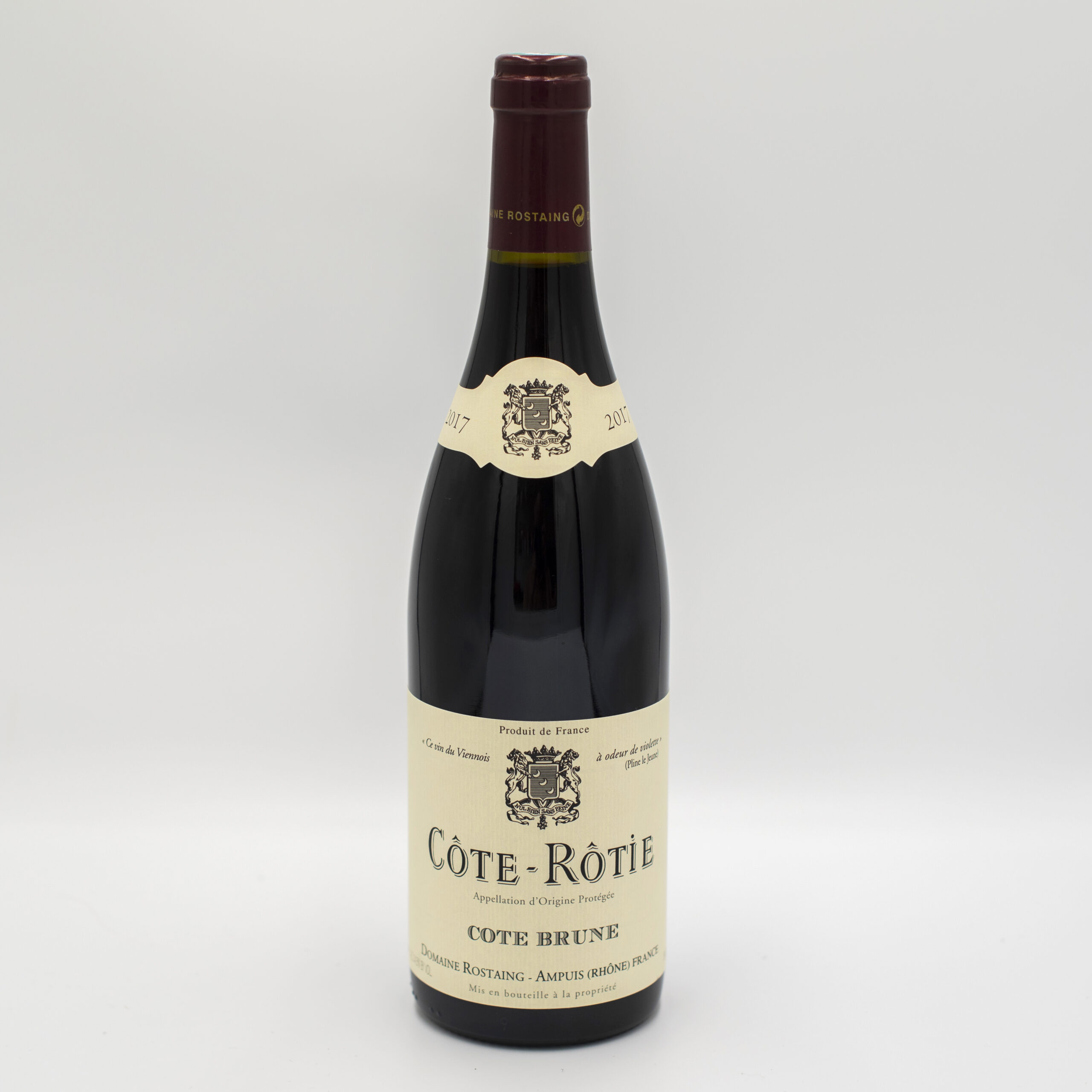
Domaine Rostaing
History & Vision
René Rostaing began with a small holding in Ampuis in the early 1970s, working it alongside a career outside wine. The decisive expansion came through family: in 1990 and 1993 he inherited parcels from Albert Dervieux and Marius Gentaz-Dervieux, two of the most respected names of old Côte-Rôtie. As a result, the domaine assembled some of the appellation’s finest old-vine sites in a single cellar. Since 2015, his son Pierre has led the estate, continuing the same line. Those looking to buy Domaine Rostaing wines online will find allocations tight and mature vintages scarce — which is precisely the space where Grandcru Grapes operates.
Domaine Rostaing — Vineyard Holdings
The domaine farms roughly eight hectares across more than a dozen lieux-dits in Côte-Rôtie, with old vines concentrated in La Landonne, the Côte Blonde, and La Viallière. The Côte Blonde parcel is co-planted with a small proportion of Viognier, vinified together with the Syrah. Meanwhile, fruit from the broader holdings goes into Ampodium, the assemblage cuvée formerly labelled Cuvée Classique. There is also a parcel in Condrieu, La Bonnette. Because the terraces are steep and narrow, nearly all work is done by hand.
Winemaking Style
Rostaing has long stood apart from the more extracted, oak-driven school of Côte-Rôtie. Fermentation typically includes a significant proportion of whole clusters, adjusted by vintage and cuvée. Afterwards, the wines age predominantly in used barrels and demi-muids; new oak plays a deliberately minor role. The result is a style built on aromatic lift, fine-grained tannin, and transparency to site rather than weight. In youth, the wines can read as restrained. With a decade in bottle, however, they develop the smoked meat, olive, and iron-tinged tertiary character that defines mature Côte-Rôtie from these slopes.
Allocation & Access
Production of the single-site cuvées is small — La Landonne and Côte Blonde amount to a few hundred cases each in most vintages. The domaine supplies a stable network of importers and private clients, and demand consistently exceeds release. Consequently, mature bottles surface on the secondary market only irregularly, and provenance varies widely when they do. Furthermore, prices for back vintages have firmed steadily as the estate’s standing alongside Jamet among the appellation’s traditionalists has been confirmed.
Relevance Today
Rostaing’s wines are built on structure and acidity rather than immediate flesh, yet most bottles are opened well before their window. La Landonne in particular asks for ten to fifteen years before the tannins resolve and tertiary development comes forward. At that point, a mature Rostaing Côte-Rôtie becomes a different proposition entirely from the same wine at release — and considerably harder to find. Our selection below comes from outside allocation and covers vintages at or approaching their peak.