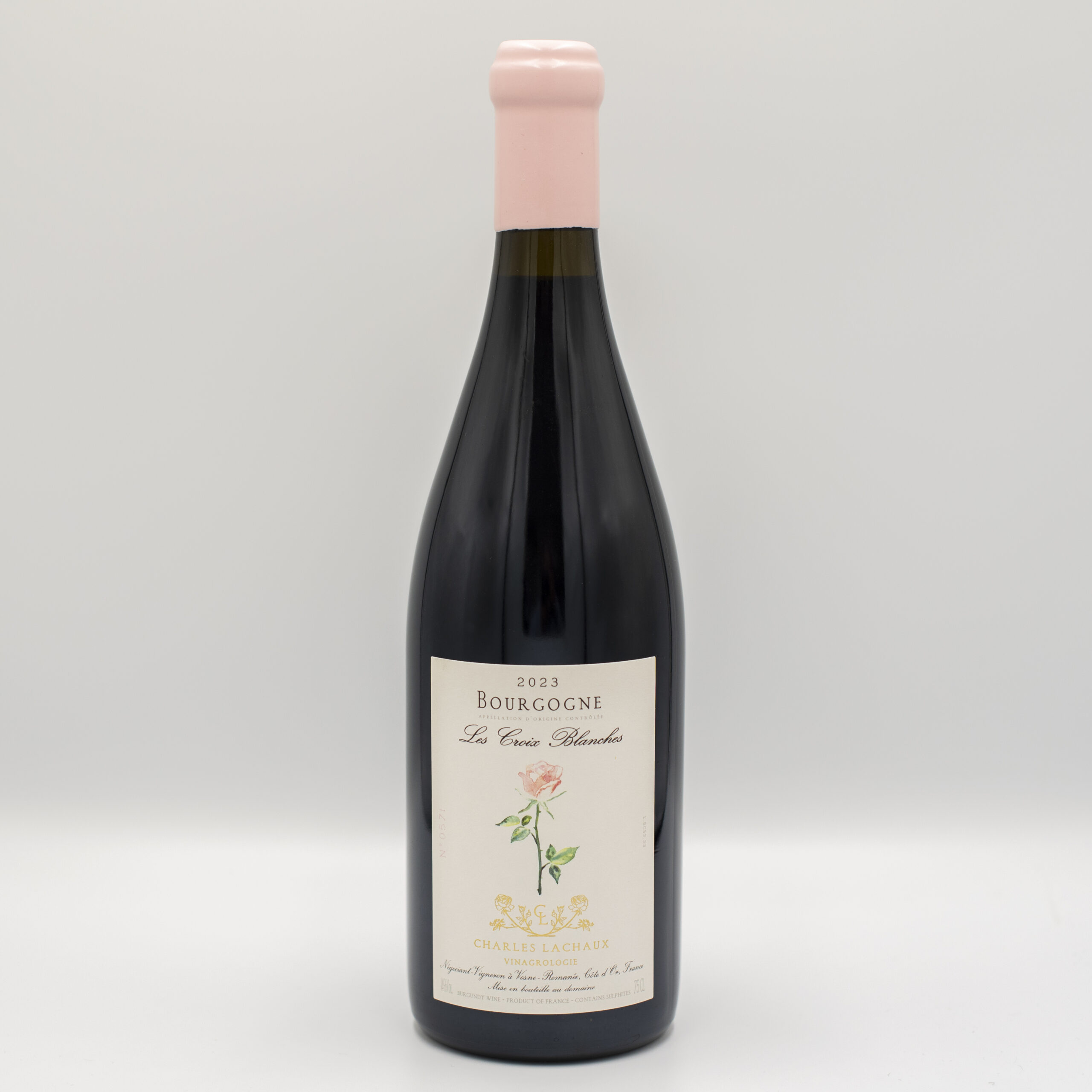
Charles Lachaux
From Aligoté to a Négoce of His Own
Charles Lachaux wine comes from two sources: Domaine Arnoux-Lachaux in Vosne-Romanée, and a micro-négoce that Charles launched under his own name in 2018. The estate was founded in 1858 as Domaine Robert Arnoux; Charles, the sixth generation, took over from his father Pascal in 2015 and has rebuilt the viticulture with Lalou Bize-Leroy as his mentor. The négoce exists because of Aligoté — the family had stopped bottling the variety and sold the grapes to négociants, and Charles wanted to vinify them again. In 2018 he was already changing the domaine’s vineyard practice, so a separate label was the simplest route. Friends who had recently taken over their own family domaines then offered him grapes, which is why the first vintage had five wines rather than one. Those looking to buy Charles Lachaux wine will find a small, tightly distributed range, which is precisely where Grandcru Grapes operates.
Charles Lachaux Wine — Vineyard Holdings
The domaine farms roughly 14 hectares, centred on Vosne-Romanée and Nuits-Saint-Georges, with further parcels in Chambolle-Musigny and four grands crus: Romanée-Saint-Vivant, Clos de Vougeot, Échezeaux and Latricières-Chambertin. Les Chaumes comes from a 0.74-hectare parcel on comparatively rich soils, while Hautes Maizières lies just downslope from Les Suchots. Yields run 30 to 40 percent below the permitted maximum, the vineyards are no-till, and in Reignots Charles is testing double planting density on one parcel. The négoce works differently: its grapes come from friends’ vineyards in Pommard, Volnay, Aloxe-Corton, Gevrey-Chambertin, Nuits-Saint-Georges and the Côte de Nuits-Villages, plus a Vosne-Romanée premier cru, Les Suchots. Bourgogne La Croix Blanche is the exception in scale — 0.35 hectares of Pinot Noir planted in the 1970s in northern Vosne-Romanée, on stony, well-drained white soils. Because the Lachaux team picks every grape itself, harvest decisions stay in-house even where the vineyard belongs to someone else.
Winemaking Style
The reds are fermented as 100% whole clusters with ambient yeasts, and macerations are short and gentle: in 2019 they ran nine to twelve days with only two foot punch-downs and a daily pump-over, and in 2020 some lasted just six days. Since extraction stays low, the wines show crunch and transparency rather than weight. Élevage takes place mostly in older barrels, with a single new Stockinger barrel — about 20 percent — for Aux Boudots and Les Suchots in 2019. Sulfur is added only after malolactic fermentation, with 20 to 40 ppm in total at bottling, and the wines are neither fined nor filtered. The one real difference between négoce and domaine is ageing: négoce wines are bottled after a little under a year, against eighteen months at the domaine. That shorter élevage keeps them fruit-driven, caught before oak leaves a noticeable patina — they can still age, although the aim is immediate pleasure.
Allocation & Access
Production is small and distribution is narrow. In 2022 Charles signed an exclusive direct-to-consumer deal for the négoce with the members’ platform Crurated, and the first collection sold out within a month; the domaine followed in 2023, while restaurants are still served through distributors. Consequently, the secondary market does the price discovery — Liv-ex reported that average prices across domaine and négoce wines rose by 487.2 percent in the year to 30 September 2022. Condition is the second issue: with only 20 to 40 ppm of total sulfur at bottling, these wines leave little margin for poor storage, which makes storage history part of what you are buying. Our bottles come through verified private cellars and trade channels, inspected on arrival — outside the allocation queue.
Relevance Today
The négoce wines were made for early pleasure rather than long cellaring, and the first vintages are now entering the stage the winemaking intended. For a buyer, the question is therefore timing rather than access to a release: a bottle bought at the right moment lets you drink the style as it was meant to be drunk. Charles was named best young winemaker at the 2021 Golden Vines Awards in London, according to the Crurated press release, and the wines have been priced accordingly. Collectors who know the Vosne-Romanée address of Mugneret-Gibourg will find a more fruit-led, earlier-bottled expression here, while those looking at Gevrey may compare En Reniard with Armand Rousseau. For the conditions behind each year, see our Burgundy harvest reports, and for how we set our dates, our guide to drinking windows. Our selection below covers Charles Lachaux wines sourced outside allocation.