Domaine Yves Gangloff
History & Vision
Yves Gangloff came to the Northern Rhône from Alsace and worked at Delas before acquiring his first parcels around Condrieu in the early 1980s, together with his wife Mathilde. The turning point came in 1987, when the négociant buying their grapes collapsed at harvest — forcing the couple to vinify and bottle under their own name. Since then, the domaine has grown parcel by parcel while remaining resolutely small. After Mathilde’s death in 2011, Yves has continued with the next generation involved in vineyard and cellar. Those looking to buy Domaine Yves Gangloff wines online will find releases scarce and allocations long settled — which is precisely the space where Grandcru Grapes operates.
Domaine Yves Gangloff — Vineyard Holdings
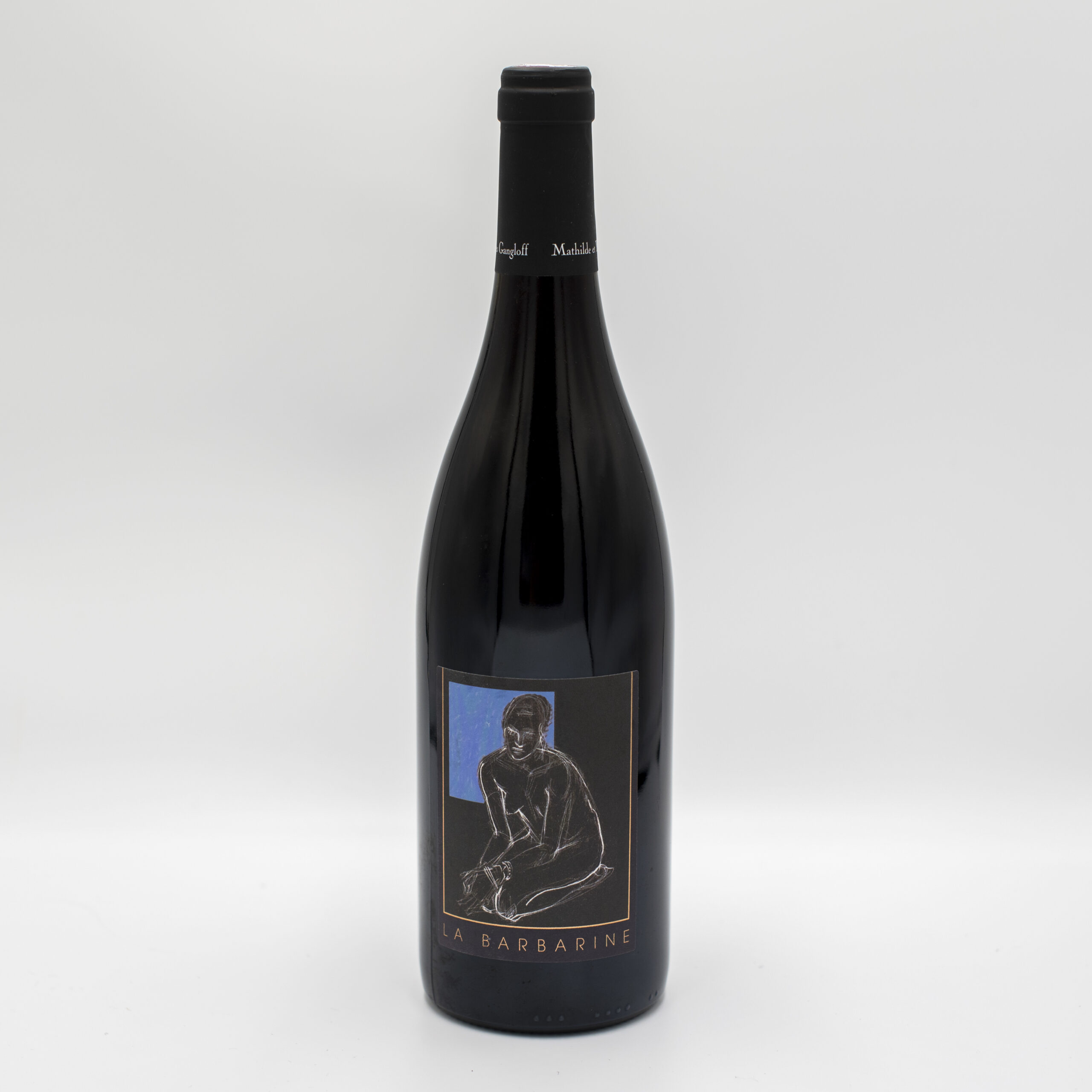
The domaine farms a few hectares each in Condrieu and Côte-Rôtie, with additional parcels in Saint-Joseph. In Condrieu, the Viognier sits on decomposed granite sands across sites including the Coteau de Chéry. Meanwhile, the Côte-Rôtie holdings span the lieux-dits Combard, Mollard, and Côte Rozier — granite, gneiss, and mica schist on steep terraced slopes. La Barbarine draws on the broader holdings with a small proportion of co-fermented Viognier; La Sereine Noire comes from the oldest Syrah, vines of forty years and more. Because of the terrain, virtually all work is done by hand.
Winemaking Style
Gangloff works with partial destemming, adjusted by cuvée and vintage, and ages the reds in barrel for up to two years. Although a proportion of new oak is used, the wines never read as oaked; the wood is absorbed into a style defined by aromatic lift, dark spiced fruit, and energy rather than extraction. The Condrieu is barrel-fermented and kept on its lees, balancing the richness of Viognier against saline freshness. Notably, the domaine releases later than most of its neighbours — the wines arrive when Gangloff judges them ready, not when the market asks.
Allocation & Access
Total production across all cuvées rarely exceeds a thousand cases, and demand has outstripped supply for decades. Moreover, the domaine is uncompromising about what it bottles: in 2021, frost losses meant La Sereine Noire was not produced at all, its fruit folded into La Barbarine instead. Consequently, mature bottles appear on the secondary market only sporadically, and condition varies when they do. Prices for back vintages have firmed steadily as Gangloff’s standing among the artisan benchmarks of Condrieu and Côte-Rôtie has been confirmed.
Relevance Today
Gangloff’s reds carry more immediate charm than many of their traditionalist neighbours, yet they are built to develop — La Sereine Noire in particular gains depth and tertiary complexity over a decade or more. At that point, a mature Domaine Yves Gangloff Côte-Rôtie becomes a different proposition entirely from the same wine at release — and considerably harder to find. The Condrieu, often opened within a year or two, rewards patience as well. Our selection below comes from outside allocation and covers vintages at or approaching their peak.